Usually someone else spots it first. A customer asks about an order you have no record of, or a colleague forwards you a link. At the other end is a fake shop that looks like yours: your name, your product photography, your copy. Sometimes it carries your full company details and legal notice too.
It feels personal when you first see it. It is also something plenty of retailers are dealing with, and there is a well worn path for getting these sites taken down. This guide covers which lever actually moves things, why the obvious first steps rarely get the shop removed, and what a report has to look like to land with the provider.
Not an isolated case, and not out of your hands
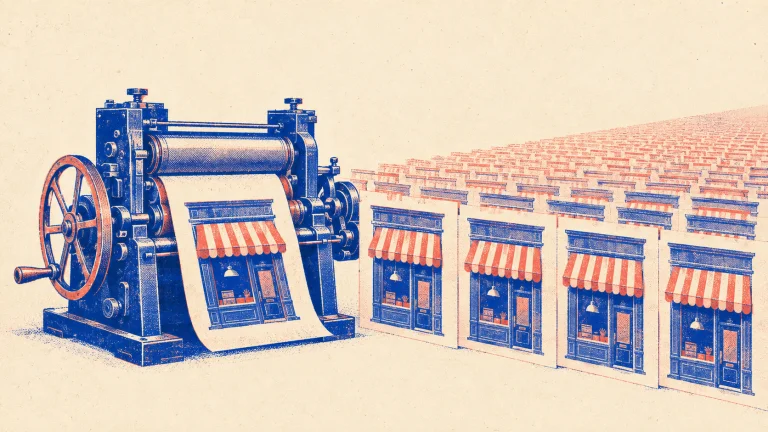
The first time you see a shop wearing your identity, it looks like someone came after your company specifically. Usually they did not. Whoever runs these sites works at volume, lifting shop templates, product images and company details off the web and standing up a batch of sites at a time.
That cuts both ways. You are dealing with a practised operation, but the response to it is just as practised. None of this has to happen in a panic. Start by documenting the shop properly, and the section on evidence below covers what that involves.
Why a lawyer or a police report will not switch the shop off
The first two moves most people make are calling a lawyer and filing a criminal complaint. Both are worth doing. Neither tends to be the thing that gets the shop offline, and the reason is straightforward.
Legal action is aimed at the operator, and with fake shops the operator is usually anonymous and based in another country. There is nobody within reach who can be made to shut anything down. A trademark assessment is still worth having. It is simply working toward something other than taking the site down.
A criminal complaint works the same way. Investigations move slowly here, especially when the providers involved sit in other jurisdictions, which makes it a poor tool for getting a site down quickly. As a record of what happened, it can still be worth filing.
When your legal details are copied
If the fake shop has taken your company details and legal notice, it is holding itself out as your business. A customer who orders there and receives nothing believes they ordered from you, and some of them will file a complaint naming you. This is where legal support earns its fee, and where you should plan on having it. This article is not legal advice.
Who can actually take the shop offline
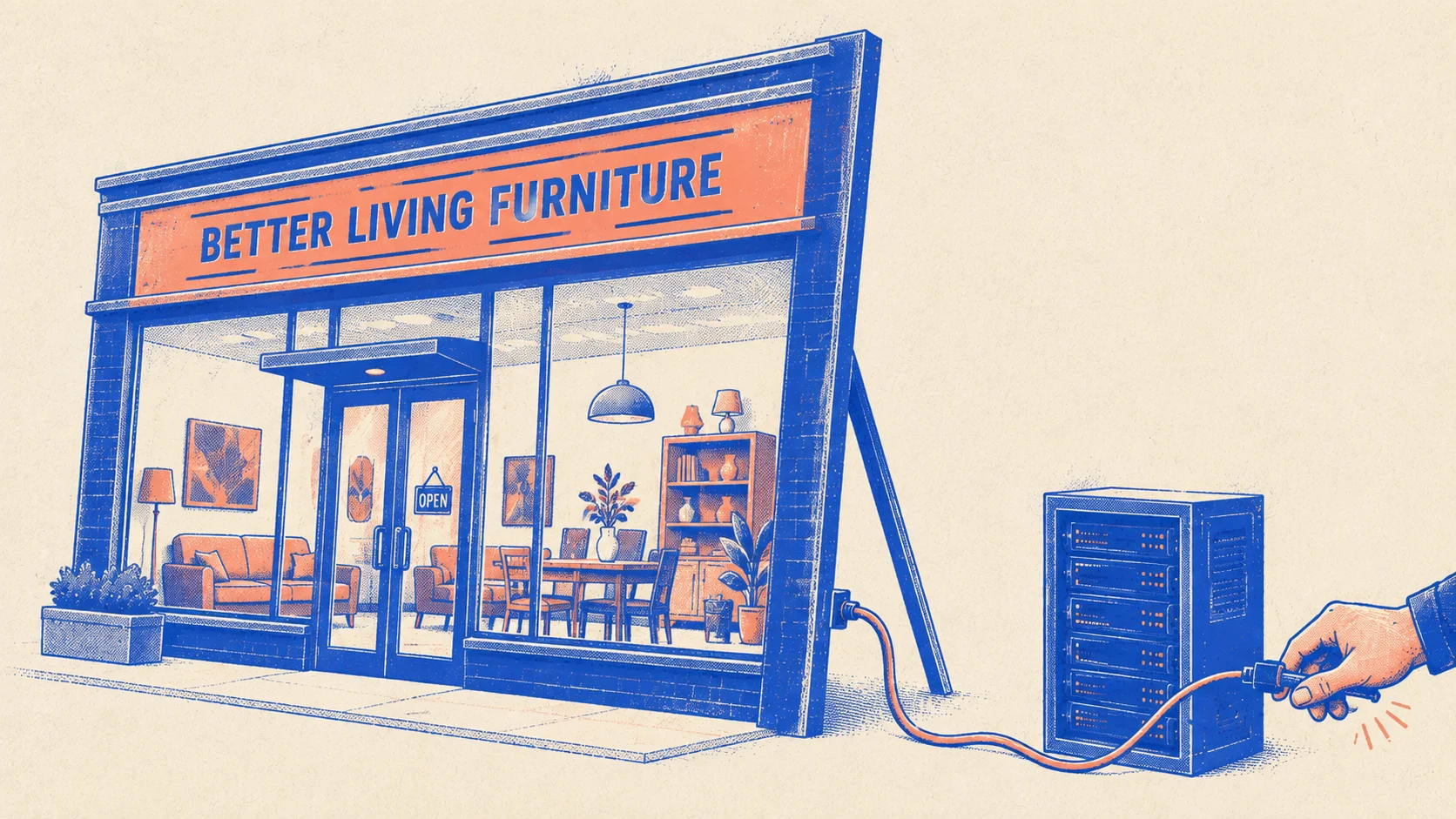
The difference comes down to who you are actually talking to. You will not get to the people behind the shop. The infrastructure they depend on is almost always within reach.
Two routes, one goal
Aimed at the operator
Lawyer or criminal complaint
The obvious first move
The shop operator
Unknown, usually abroad
Nobody to hold liable
Aimed at the infrastructure
Abuse report with evidence
Documented, checkable in seconds
Host, registrar, platform
Known, reachable, bound by their own terms
A takedown becomes possible
Every fake shop needs somewhere to run: a host, a domain through a registrar, usually a shop platform, often a payment provider. Those companies have names and addresses, and they have terms of service that a fraudulent shop breaks. An abuse report tells them something unlawful is running on their infrastructure. That is a different exercise from a legal dispute with the operator, and it is generally not a law firm's core business either.
Which provider to approach first, and what each one can realistically do, is laid out step by step in our website takedown guide. If you are not sure who sits behind a domain, our hosting lookup is the place to start.
Good evidence makes the decision easy for the provider
This is where a report succeeds or fails. Most people document as though they were building a court case. In practice you are writing for someone quite different: a support agent at the provider who knows nothing about your situation and has a queue to work through. That first pass may well be handled by an automated system.
So the rule of thumb is simple. Put the report together so the fake is obvious at a glance and nobody has to take your word for it.
- The specific URLs concerned, not just the domain.
- Dated screenshots showing the shop as it looked when you reported it. Our website scan does this for you and stores the screenshot, the page text, and the source under one link you can attach to the report. It is public, though: if the shop carries a copied legal notice naming a real person, take the screenshots yourself instead.
- A side by side comparison: your original page next to the copy, your product photos next to the lifted ones.
- Proof that you hold the rights, such as your trademark certificate or the original image files.
- The exact term of service being broken, rather than a general accusation of fraud.
What the reviewer sees
Report A
There is a fake shop on this domain. Please remove it.
Nothing here can be checked. The reviewer would have to research the case themselves.
Report B
- The specific URLs concerned
- Dated screenshots of the shop
- Original and copy side by side
- Proof of who holds the rights
- The exact term of service being broken
The violation is evidenced without any research.
If your company details were copied, say so in the report. It is quick for anyone to verify and hard to argue with.
Where going it alone breaks down
Straightforward cases are worth handling yourself, and that is what our guide is there for. In practice, though, three things tend to get in the way.
- The proxy in front of the host. A WHOIS lookup often returns nothing but a service like Cloudflare, which sits in front of the actual host rather than being it. Until you work out who the real host is, you are a step removed from the people who can act.
- The format of the report. It is common to put several hours in and still have the report bounce, because the documentation is not in the shape that particular provider expects.
- Every provider works differently. Forms, processes and requirements vary, sometimes country by country, so what you learn the hard way with one of them often does not transfer to the next shop.
A stop along the way, not the host
WHOIS and DNS lookup
Domain
shop-example.example
Registrant
Withheld by a privacy service
Nameserver
cloudflare.com
Host
not visible in this lookup
A reverse proxy does not host the content, so it cannot simply take the shop down. It does pass complete reports on to the host and the operator, which is worth knowing before you submit anything: assume the operator will read it.
In parallel: limit the damage
Orders keep arriving for as long as the shop is live. Two things are worth doing straight away, independently of the takedown.
Brief your customer service team. When people write in about orders you have no record of, the team should know what is happening and what they are allowed to say. If your company details were copied, those customers will come to you by default. A short notice on your site or your channels takes a lot of the heat out of it.
Check whether the shop is being advertised, too. Fake shops often run on paid ads, and those can be reported separately from the site itself. Our research on fake shops in Google Ads shows how common that is.
It rarely stays at one shop
There are no reliable figures on this. What we see in our own casework is a pattern: these shops turn up in clusters. Several sites around one theme, with overlaps you can spot by eye, likely run by the same people.
How to spot a related shop
Product photography
The same shots, often in the same order.
Company details
Copied word for word, sometimes across several shops at once.
Shop template
Same structure, same categories, same boilerplate text.
Payment recipient
The same bank details or the same payment service.
Technical traces
Shared nameservers, certificate patterns or tracking codes.
Which means one takedown rarely settles the matter. The work you did once comes round again with the next shop, often with different providers and different requirements. After the first case it usually makes sense to switch to continuous monitoring rather than starting over every time.
If you would rather not do this yourself
This is the part we take on. nebty works out which providers are actually responsible, including when a proxy sits in the way, prepares the evidence in the form each one expects, and runs the takedown across jurisdictions until it is finished. Your team does not have to absorb the legwork.
We only charge for takedowns that succeed, so a difficult case does not turn into an expensive one.
Frequently asked questions
Can I get a fake shop removed myself?
In straightforward cases, yes. If the shop sits with a host you can reach and you can document your ownership properly, a well prepared abuse report often does the job, and our website takedown guide walks through the steps. It gets harder when the real host sits behind a proxy, or when several providers in different countries are involved.
Why will a lawyer not get the shop taken offline quickly?
Because legal action is aimed at the operator, and with fake shops the operator is usually anonymous and based in another country, so there is nobody within reach to hold liable. Legal advice is still worth having, just for different goals: assessing trademark infringement, putting the case on record, and protecting you if your own company details have been copied.
The shop copied our company details and legal notice. What does that mean for us?
It means the fraudsters are presenting themselves as your business. Customers who order there and receive nothing believe they ordered from you, and some of them will file a complaint naming you. Brief your support team and bring a lawyer in at this point. This is where legal help genuinely earns its fee.
Is it worth filing a criminal complaint?
Rarely as a way to get the site removed, because investigations move slowly, especially when the providers involved sit abroad. It can still be worth filing as a record of what happened, and if your company identity is being misused, the case should be documented anyway.
I cannot find the host. WHOIS only shows a proxy service.
That is where most people get stuck. A service like Cloudflare sits in front of the actual infrastructure as a reverse proxy, so it does not host the content and cannot simply take the shop down. It does pass complete reports on to the host and the operator. Working out who the real host is takes manual digging, and it is one of the reasons attempts stall here.
Will it stay at this one fake shop?
In our experience, rarely. We see these shops turn up in clusters: several sites around one theme, with overlaps you can spot by eye, likely run by the same people. So a single takedown tends not to settle the underlying problem.