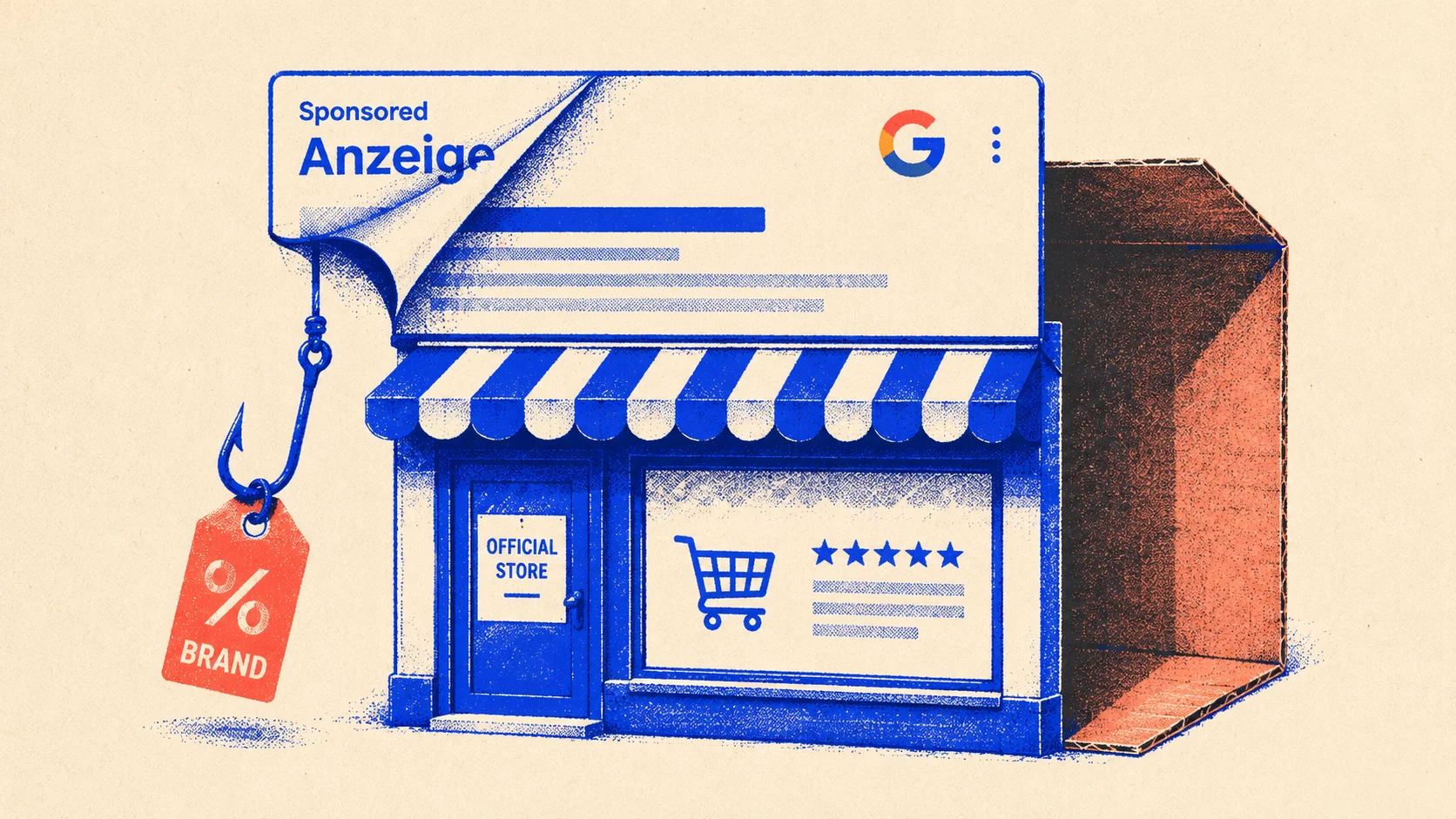
A paid ad at the top of Google looks like a seal of approval. For a lot of shoppers it is the opposite: bought space, sometimes hiding a fake shop. And that shop often carries the name of a real brand.
For the ARD documentary "Die Wahrheit über Google" we worked with our sister project Hinweishelden and measured for weeks how often fake shops appear in Google Ads, and how long they stay live after being reported. This post looks at what those numbers mean for the brands whose products get used as bait.
Die Wahrheit über Google
The ARD documentary and our study
The full documentary runs in the ARD-Mediathek, and the data behind it comes from our analysis with Hinweishelden. The complete study, with the method and every figure, lives on Hinweishelden, our sister project for consumer protection.
Note: the documentary and the study are both in German.
The numbers that matter
We ran 4,109 searches across about 100 common product terms through Google from early April through the cutoff date of May 25, 2026 and logged every ad. Advertisers we did not already know, we checked one by one. When something looked like fraud, we cross-referenced the shop with the consumer protection agency's fake-shop finder and reported only the cases it flagged clearly as fraud.
Fake-shop rate
3.5%
of ad placements led to a fake shop
Roughly 1 in 30 placements
Days online after a report
106,599
ad placements logged
4,109
searches run
97
fake-shop URLs reported
So roughly one in every thirty ad placements led to a shop the consumer agency lists as fraud. That sounds small. Scaled to the reach of a normal search day, it is not. Strip out the short-lived ads that disappear within a day, and the reported ones stayed in rotation for about 19 days.
Why fake shops in Google Ads are your problem
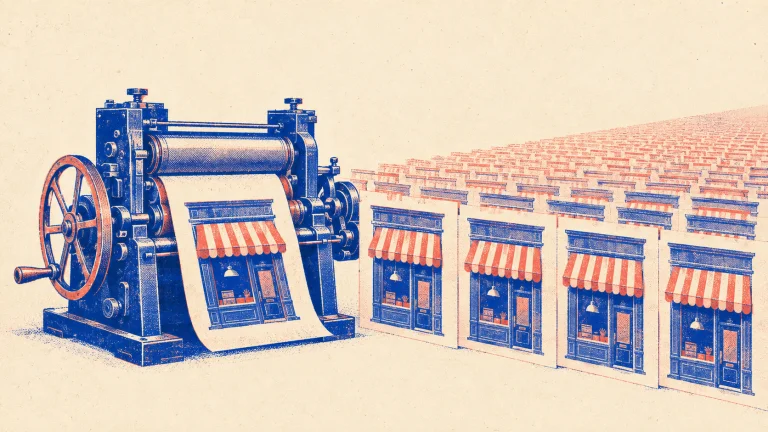
A fake shop rarely builds its own credibility. It borrows yours: known product names, sometimes a logo, a domain that resembles the real one. The ad sits at the top of Google, the customer assumes the placement was vetted, orders, pays by bank transfer and receives nothing.
The fallout then lands on the real brand. You get support tickets, chargebacks and bad reviews for a purchase you never handled. Every day the ad runs, it reaches new victims and chips away at trust you spent years building.
Google blocks a lot, but rarely fast
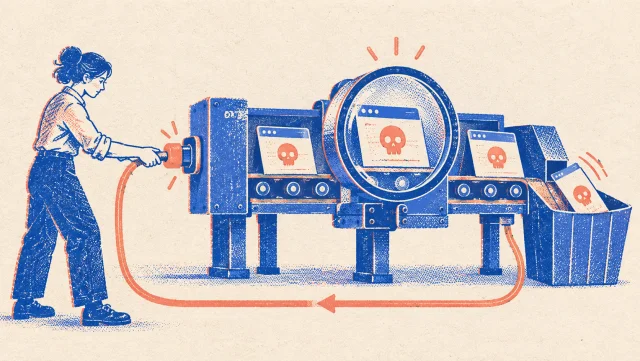
Google says it blocks more than 99 percent of problematic ads before anyone sees them. That helps. The rest is still your problem. Every one of our 97 reports came back with a note that the case was under review. After that, the ads stayed in rotation for about 11 more days.
What we saw suggests the URLs dropped out less because of a deliberate decision and more because they slowly piled up on enough spam lists. For a brand, that means a report buys you mostly waiting. Rely on the platform alone and your name keeps running as bait for days.
What brands should do now
You cannot spot every fake ad that borrows your name, but you can make sure you hear about them fast and act fast.
- Watch where your name shows up. Lookalike domains and ads carrying your brand name can be monitored continuously. Domain monitoring flags new registrations before they turn into a shop.
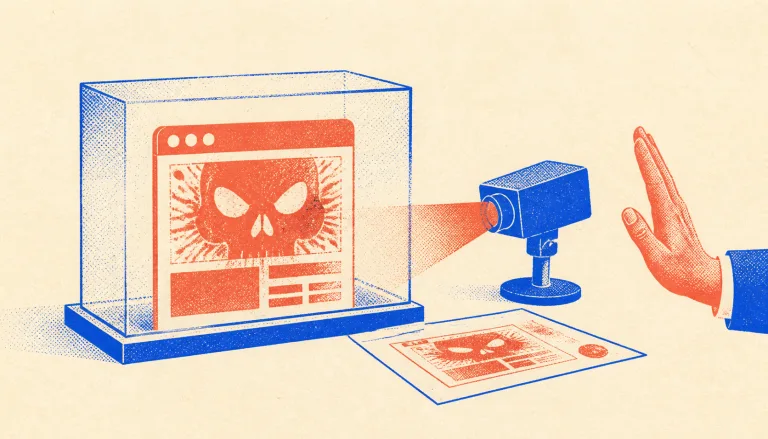
- Capture evidence and report to the right place. The ad form is only one lever. Hosting providers and registrars often act faster when the report is well documented. A website scan keeps the landing page on record before the ad is pulled. We cover how a website takedown works in detail.
- Expect repeat offenders. After one takedown, the next domain usually appears. Only continuous monitoring beats that, not a one-off response.
- Strengthen your brand rights. A registered brand gives every takedown request weight. Providers take documented reports far more seriously.
Common questions
Do fake shops in Google Ads abuse real brands?
Regularly. Scammers lean on known product and brand names because those carry the trust their own domain lacks. That borrowed trust is exactly what hurts your business.
How fast does Google remove reported fake ads?
In our analysis it took about 11.2 days on average after the report, and 48 days in the most stubborn case. So do not count on a report alone to fix the problem quickly.
Can nebty get these ads removed?
We monitor where your brand is abused, capture evidence and push takedowns through hosting providers, registrars and platforms. That keeps the bait online for less time.
The takeaway
Our study for "Die Wahrheit über Google" paints a sober picture. Fake shops show up regularly in paid Google Ads, and a report mostly buys you waiting. A paid ad is not a seal of approval, it is bought space. For brands that means keeping an active eye on your own name instead of hoping the platform acts fast enough.